
In August 2022, I took an amazing 5-day road trip to the Dolomites, and I’ve gathered some wisdom along the way I wish to pass on:
Plan your road trip
Booking ahead is key. We tried to be spontaneous and left the booking for the last minute. Unfortunately, this meant the best places were already full, and what was left was way over our budget. To make matters worse, our Airbnb host canceled on us just as we were getting close, and moved us to a different apartment they claimed was just as good. It wasn’t. The place was older, not as nice, and cheaper than what we’d originally booked, but they wouldn’t refund us the difference. So, big tip: book early to avoid stress, and always check out the place first if things go sideways.
Where to stay
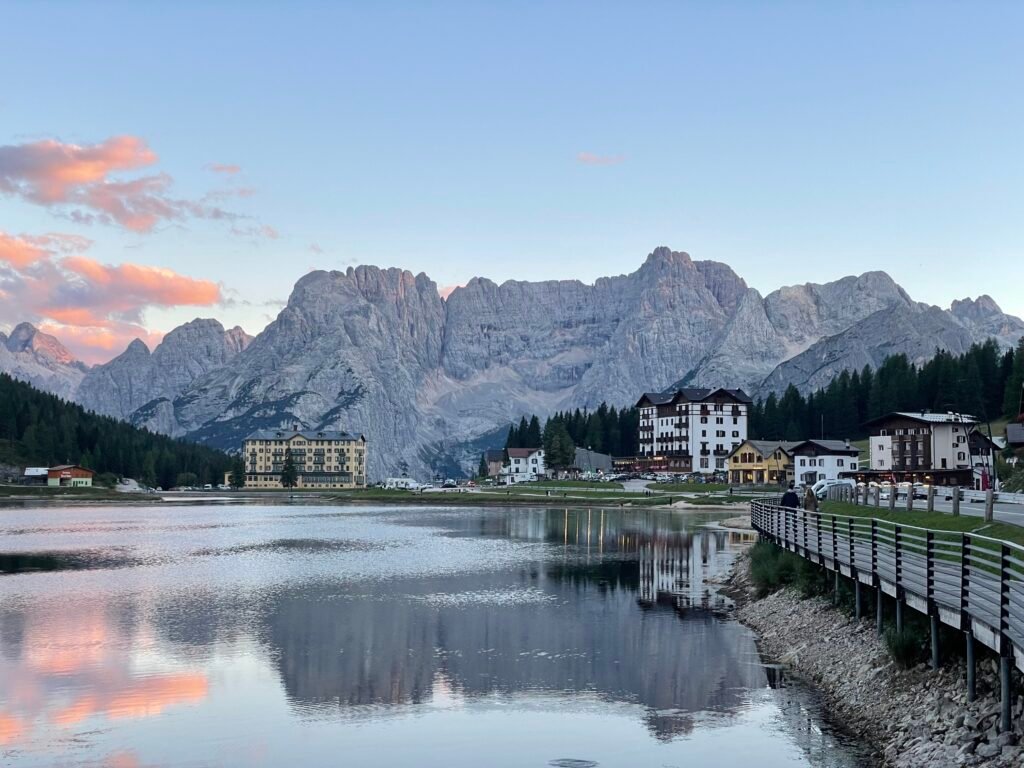
Places like Lago di Misurina and Cortina d’Ampezzo are perfect stops on your way to see beautiful places like Lago di Braies, Dobbiaco, Lago di Sorapiss, and the Tre Cime. They’re all stunning and worth a visit.
Mountain roads
Be prepared for the mountain roads; they’re winding, full of turns, and can make even a short distance feel like a long haul. It’s all part of the adventure, but it’s good to keep in mind when planning your daily excursions.
Remember, a little planning goes a long way, especially in a place as popular as the Dolomites. Safe travels!
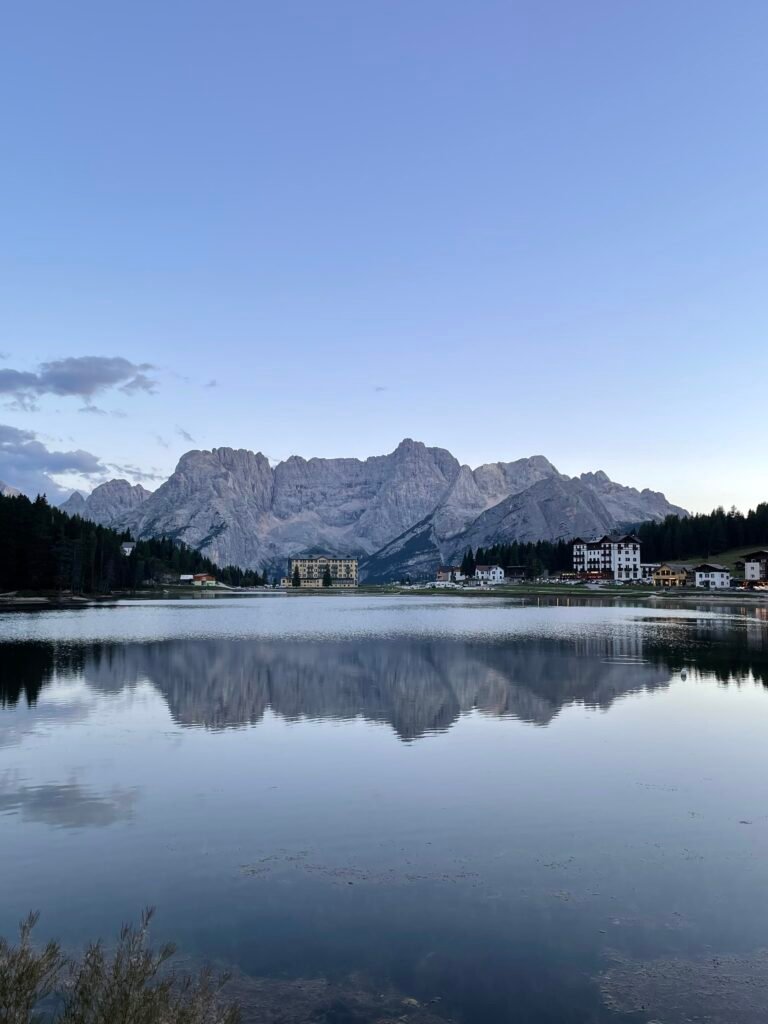
Here’s a snapshot of the picturesque places we visited:
- Day 1: Lago di Dobbiaco
- Day 2: Lago di Braies
- Day 3: Tre Cime di Lavaredo
- Day 4: Lago di Sorapis
- Day 5: Lago di Carezza
- After the Dolomites, what’s next?
DAY 1
Hitting the Road to the Dolomites and visiting Lago di Dobbiaco
Our adventure to the Dolomites started with a nighttime drive. We thought it’d be smart to skip the daytime traffic and get an extra day in the mountains. But, let me tell you, driving at night might dodge the cars but not the tiredness.
Close to the Italian border, still in Austria, we realized we needed a break. So, on a whim, we found this little guesthouse (« Gasthaus ») on Booking.com. A quick call got us a cozy (and cheap!) spot to crash for a few hours. That little nap? A game changer. It gave us just enough energy to make it the rest of the way.
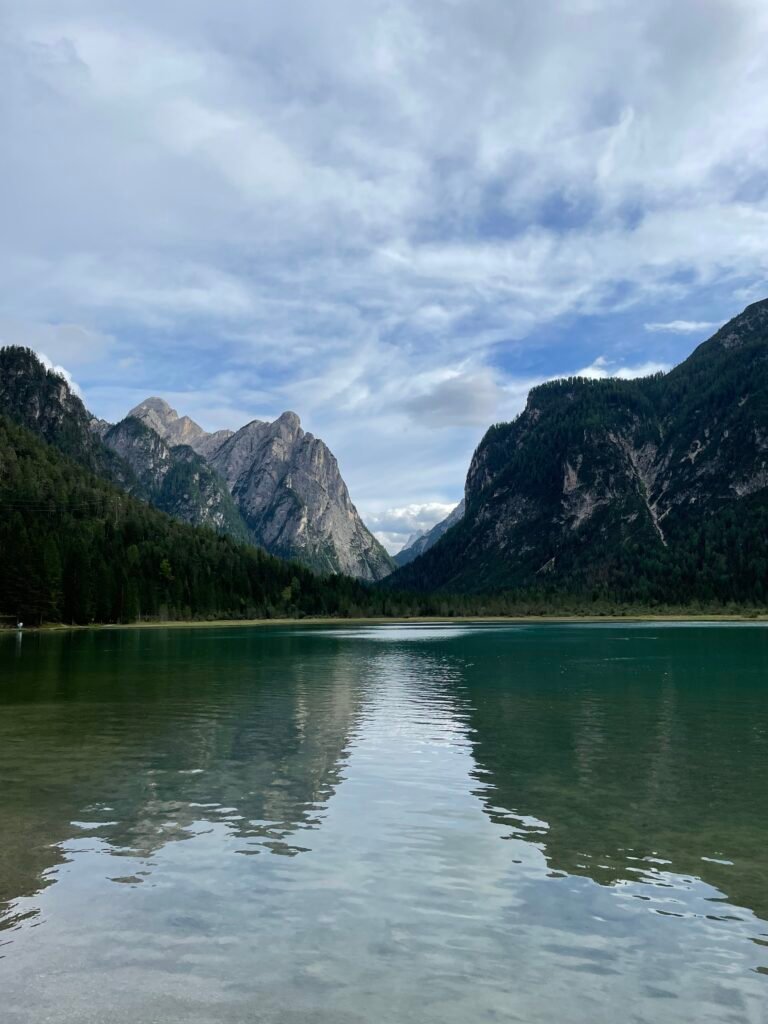
With fresh eyes and a bit more energy, we couldn’t pass by Lago di Dobbiaco without stopping. It was our first taste of the Dolomites’ beauty – a tranquil lake surrounded by nature. We stretched our legs with a walk around the lake, sipping on drinks and grabbing a bite to eat. Though, the lakeside restaurant wasn’t our best move. It felt too much like a tourist trap, with prices not quite matching the quality of the food.
Finally, we arrived at our stay for the night. With tomorrow’s hikes in mind, we spent some time prepping meals. Knowing we had a day of exploring ahead made every slice and dice in the kitchen feel part of the adventure. It was the start of a beautiful and sporty adventure!
DAY 2
Cozy day at the Lago di Braies
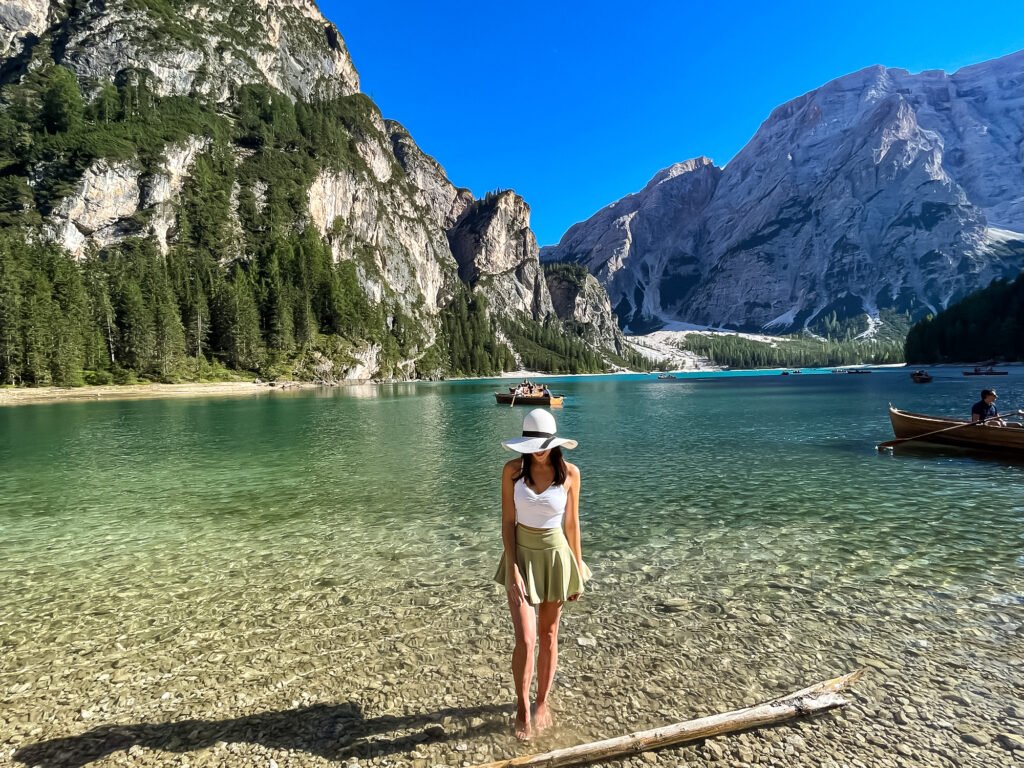
Our second day in the Dolomites was dedicated to exploring Lago di Braies, also known as Pragser Wildsee in German. Its fame has exploded, partly thanks to countless Instagram posts, making it still a must-visit spot.
This circuit isn’t a hike, it’s an invitation to experience the tranquility and stunning vistas of Lago di Braies at your own pace. No need for elaborate preparation – just a good pair of walking shoes and some snacks to enjoy the beautiful views.
You can walk the path in either direction, but going clockwise is my tip. The path is straightforward – just follow the trail as it hugs the lake’s shoreline.
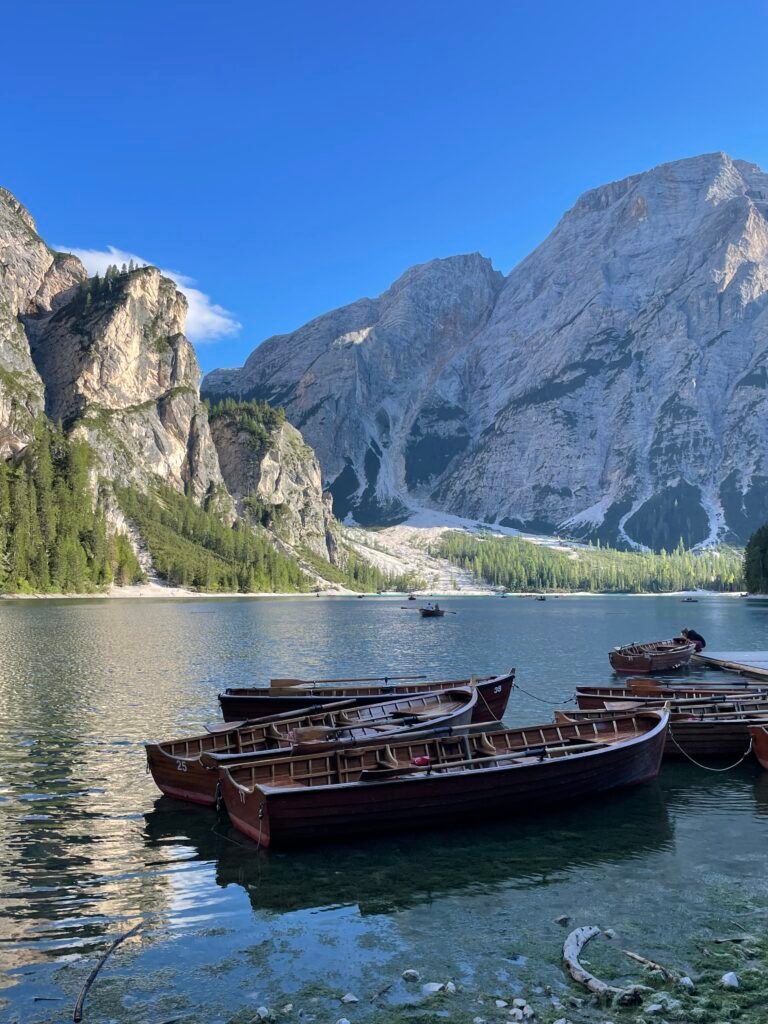
Hike details:
- Distance: The loop is 4km (about 2.5 miles) long.
- Walking time: It takes between 1 to 2 hours to complete, depending on how often you stop.
- Hiking difficulty: Easy.
- Elevation gain: The path rises about 50 meters (165 feet) in total.
- Best time to visit: The trail is most accessible and enjoyable from May through November.
- Trail markings: Look for the yellow markers; they’ll guide you along the circuit.
How to get to the Lake Braies?
Situated in the Fannes-Senes-Braies Nature Park, near the Val Pusteria in the northern Dolomites, reaching Lago di Braies by car is a journey through stunning landscapes. - From Lake Dobbiaco: a short 20-minute drive, 16km
- From Cortina D’Ampezzo: 46km away, the trip takes about an hour
- From Bolzano: the farthest at 101km, requiring around 1 hour and 45 minutes.
Is there a parking available?
There are 4 parking lots around the lake.
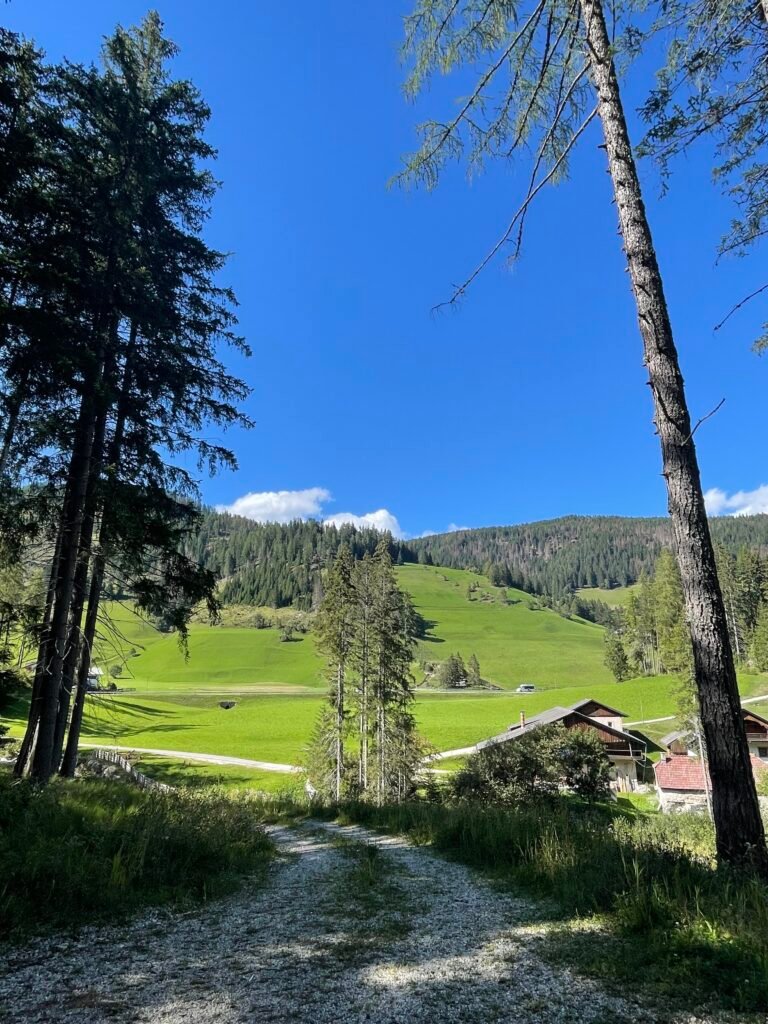
- P1 Parcheggio Lago di Braies: Situated 6 km from the lake, this parking lot is where you can park and hop on a bus to Lago di Braies. We chose this spot for our car, however, we walked to the lake, surrounded by the green meadows and charming wooden houses dotting the landscape.
- P2 Parcheggio Lago di Braies: Only a 15-minute stroll from the lake, this spot boasts a handy kiosk serving up burgers. At just 6 Euro for the whole day, it’s the most wallet-friendly option close to the lake.
- P3 Parcheggio Lago di Braies: Located just behind P4, this parking area is a mere 5-minute walk from Lago di Braies and features electric car charging stations.
- P4 Parcheggio Lago di Braies: This is the nearest parking lot to the lake but comes at a higher cost. It’s possible to prebook a spot here during the busier summer months, ensuring you have a place even when it gets crowded.
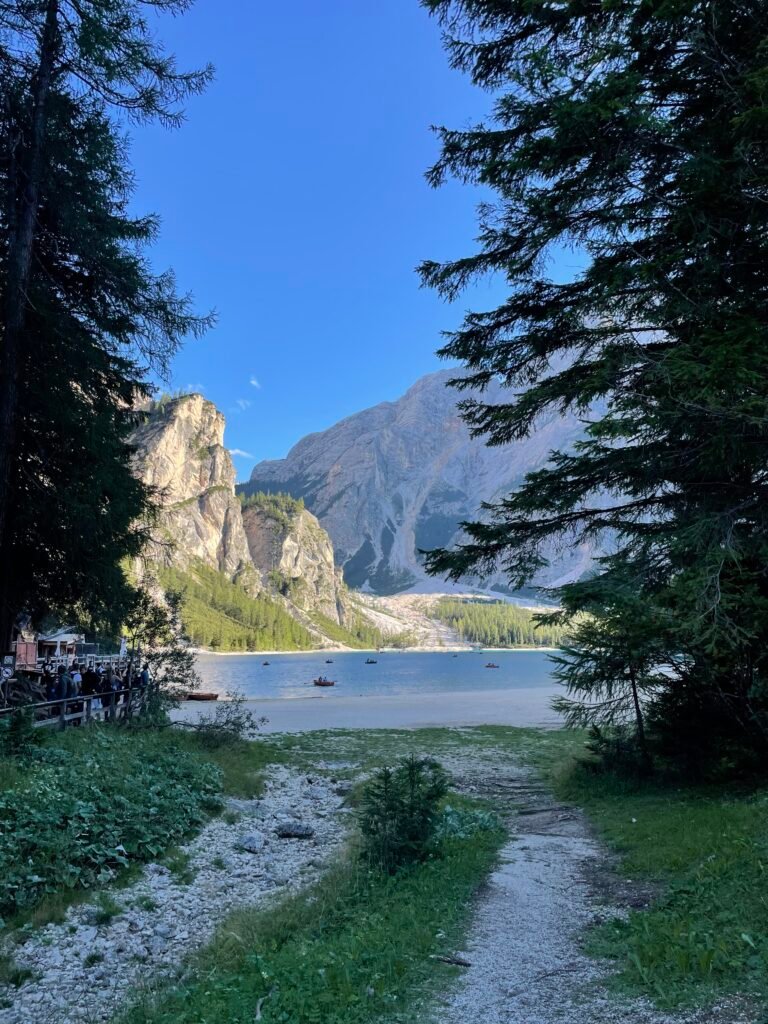
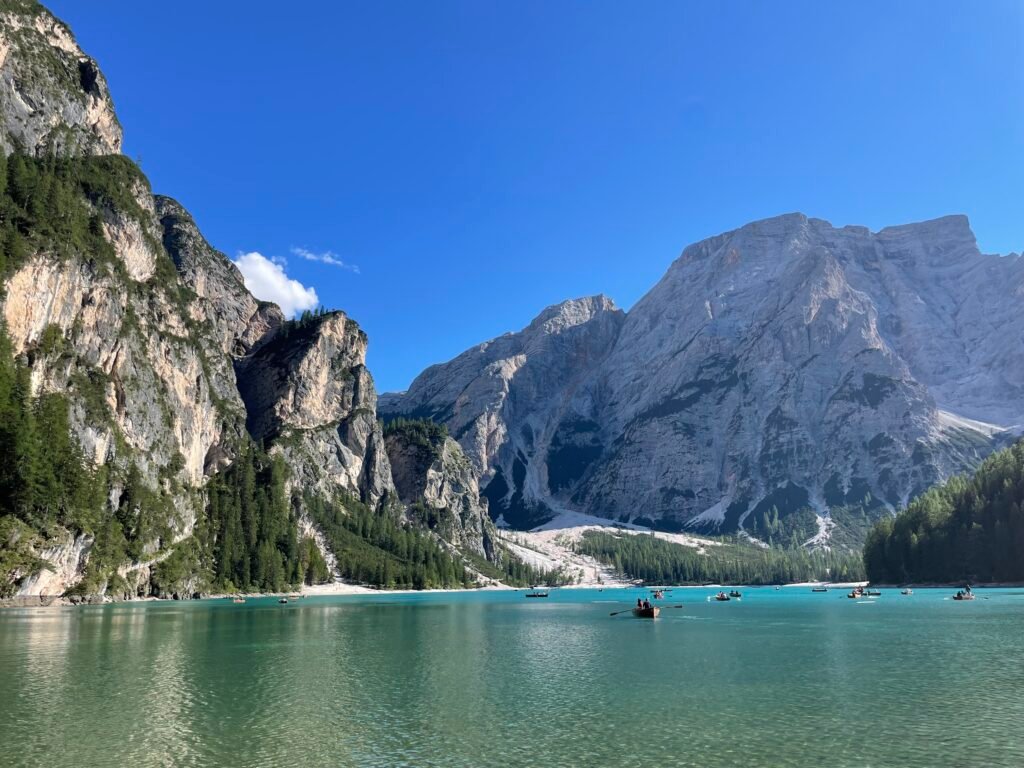
During peak season, from mid-July to mid-September, the road to Lago di Braies is closed to private vehicles from 9 AM to 4 PM to ease congestion. To avoid getting caught in this restriction, aim to arrive early in the morning or later in the afternoon, or consider public transportation.
- Public Transportation to the Lake: Bus no. 442 runs regularly from Dobbiaco to Lago di Braies, taking about 40 minutes. With 15 stops along the route, it’s easy to find a convenient boarding point.
- For those coming from Cortina D’Ampezzo, the journey by bus includes a change in Dobbiaco and takes roughly 90 minutes.
Is it worth visiting Lake Braies?
The good and the busy: Lago di Braies is really beautiful, with its clear water and big mountains all around. But, it’s also very popular, which means it can get crowded. In the morning, you might see people arguing over the best spot for a photo, and some even sneak into places they shouldn’t be just to get a good shot. If you go, just know it won’t be quiet and empty. Also, in August, it starts to get dark around 6 pm.
Can You Swim There? No, you can’t swim in the lake. It’s protected, which means swimming is not allowed to keep the place safe and clean.
What about flying Drones? Drones are not allowed either. The rules say no drones in the park, but some people still try to use them. They can get fined for doing this.
Renting boats: If you want to get out on the water, you can rent a boat. But, it’s pretty expensive now – 50 euros for just 30 minutes. If you’re planning to do something special like a photoshoot, you have to book the boat in advance and it will cost even more.
DAY 3
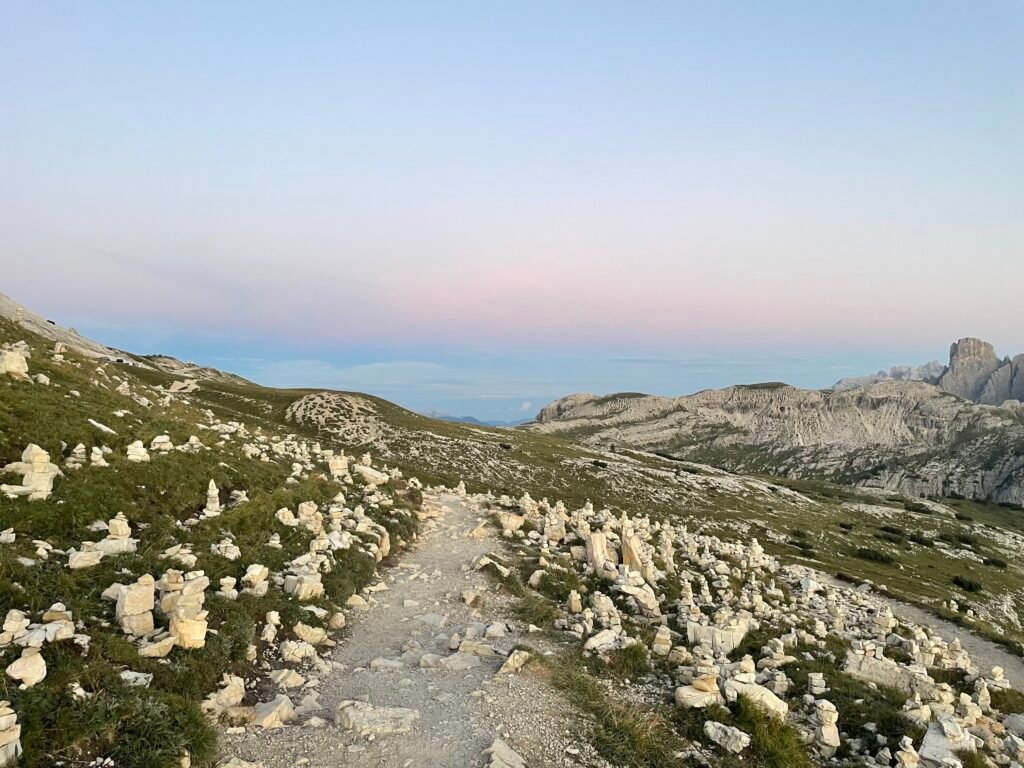
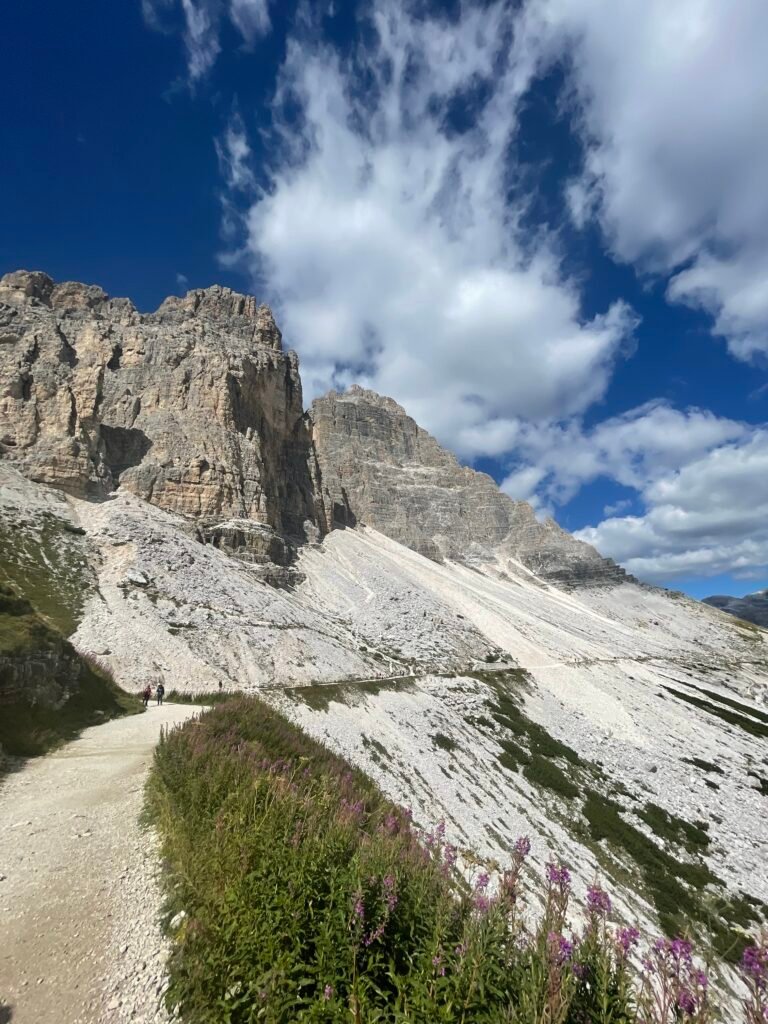
A Day Trip Around the Tre Cime di Lavaredo
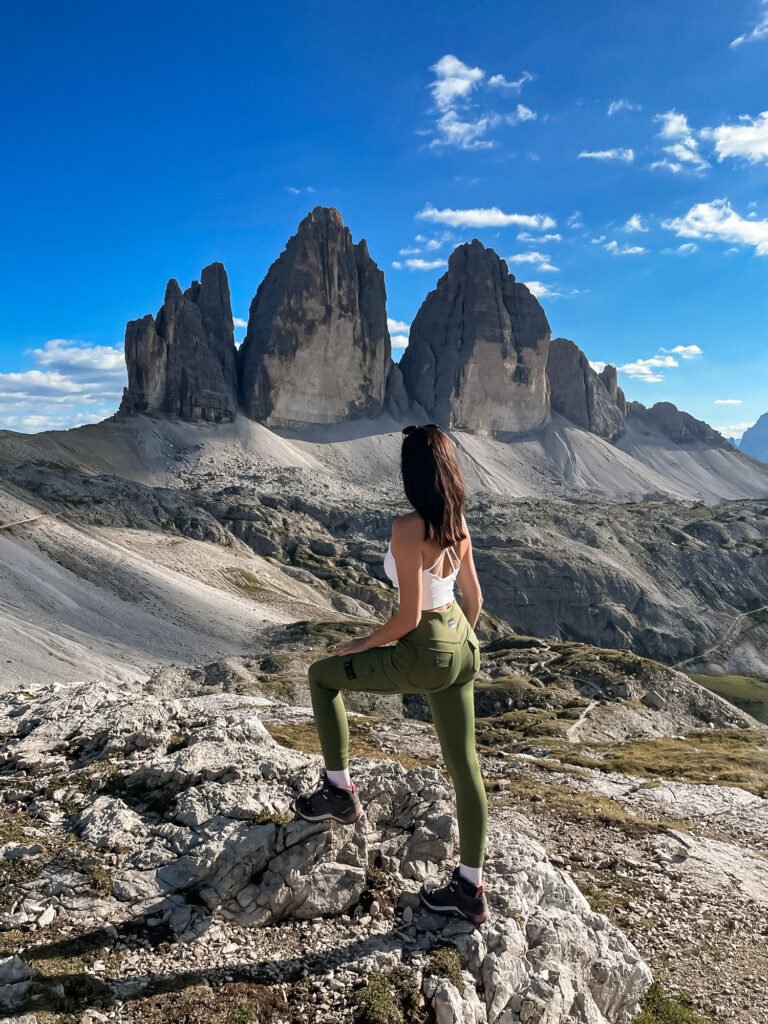
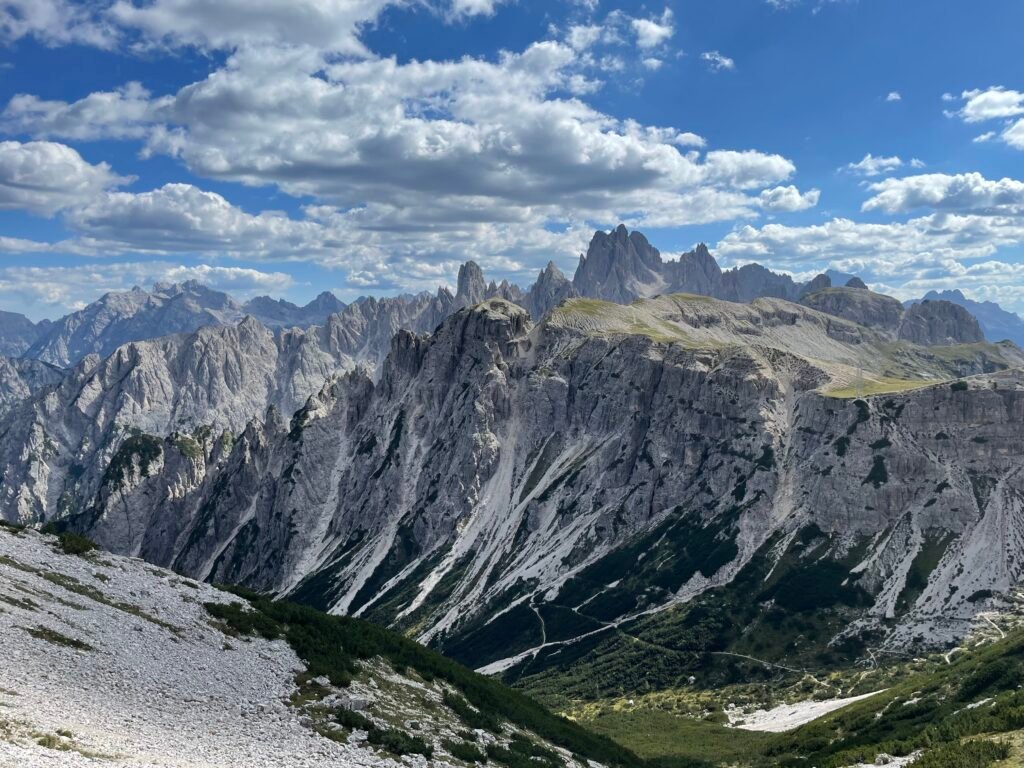
Our third day in the Dolomites was all about exploring Tre Cime di Lavaredo, or Drei Zinnen as it’s called in German. It’s often said to be the best day hike in the area, thanks to easy access and stunning views all around.
Why is it so special?
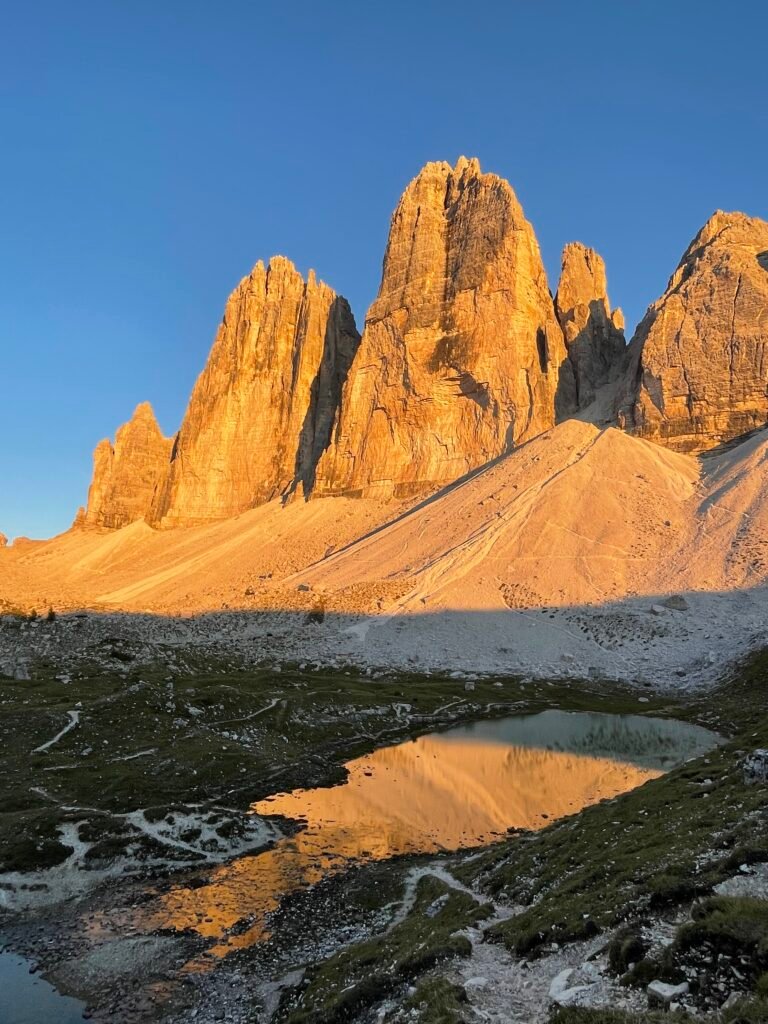
Tre Cime di Lavaredo consists of three massive peaks that stand tall in the Sesto Dolomites. They’re iconic in this part of Italy, drawing folks from all over during the summer months. The tallest peak, Cima Grande, reaches nearly 3000 meters into the sky, with Cima Ovest and Cima Piccola on either side.
Best time to hike the Tre Cime di Lavaredo?
Late June to mid-October is prime hiking season. The road to the trailhead opens late May or early June, but if you go early, expect some snow on the path. Also, the rifugios along the trail for food and drinks only open late June to late September.
Hike detail:
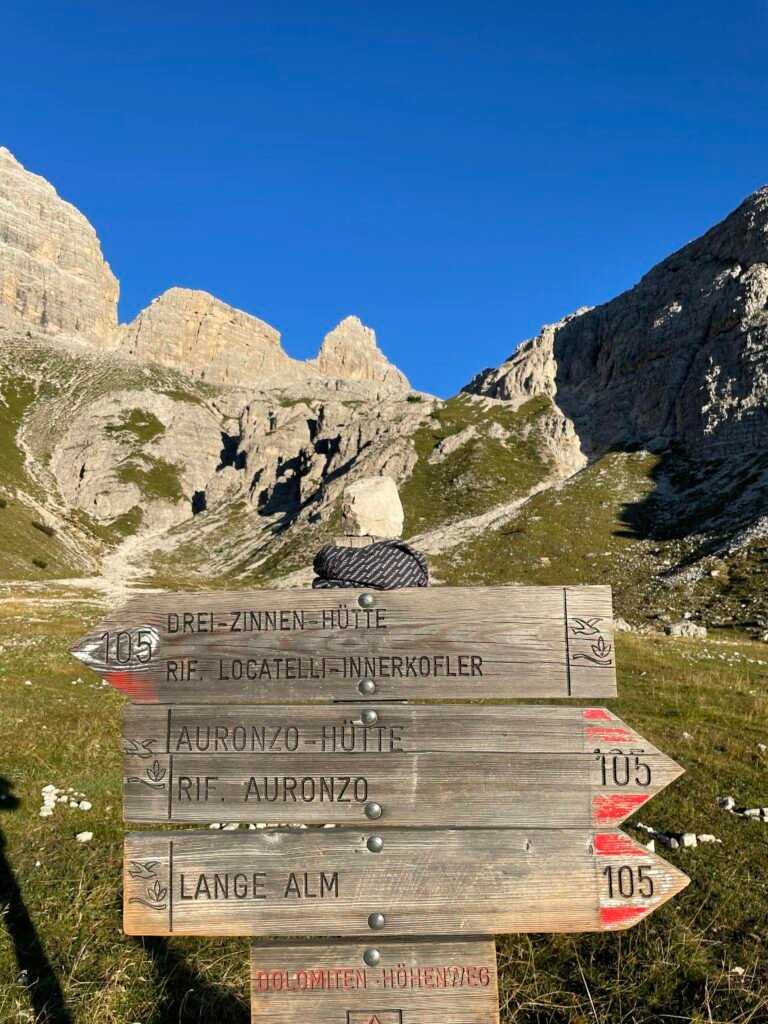
- Start: Rifugio Auronzo, which you can get to by car or bus.
- Distance: 9.7 km
- Time Needed: 4 hours
- Elevation Change: 430 meters
- Difficulty: Easy to moderate
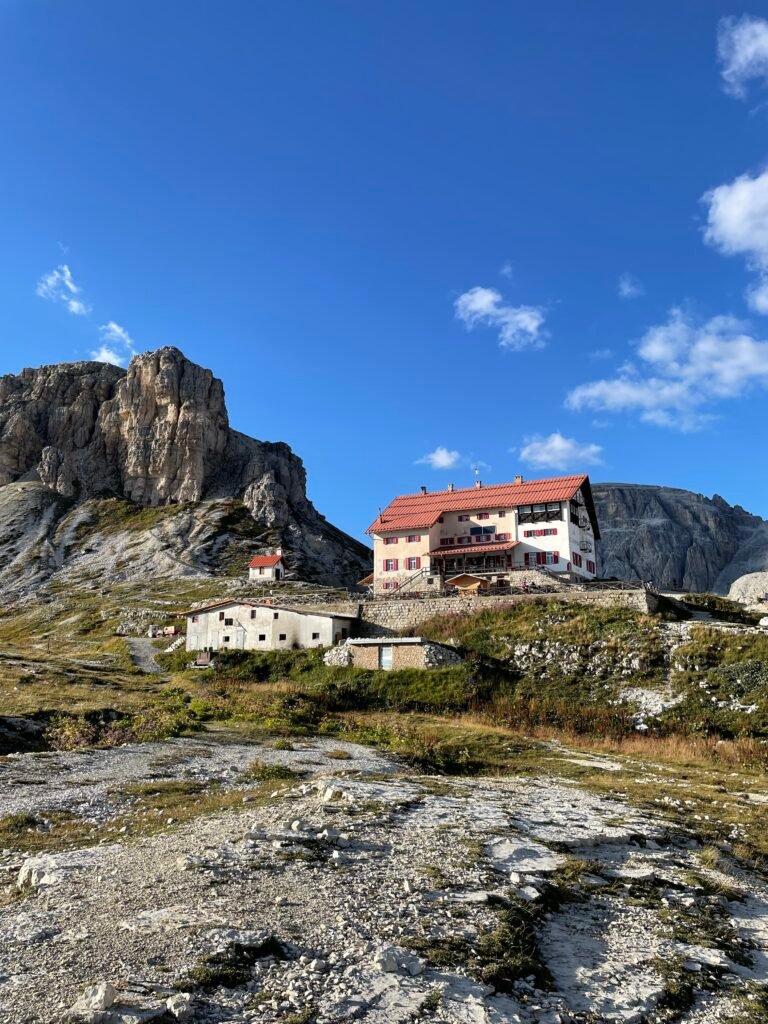
- Best Bits for Food: Try Langalm for a quick bite, but save room for a meal at Rifugio Locatelli. Maybe skip Rifugio Lavaredo for food.
How to avoid the crowds?
Starting early or visiting in October can help you miss the crowds. If you’re up for a quieter approach, try starting from Val Campo di Dentro and heading to Rifugio Locatelli.
Staying overnight:
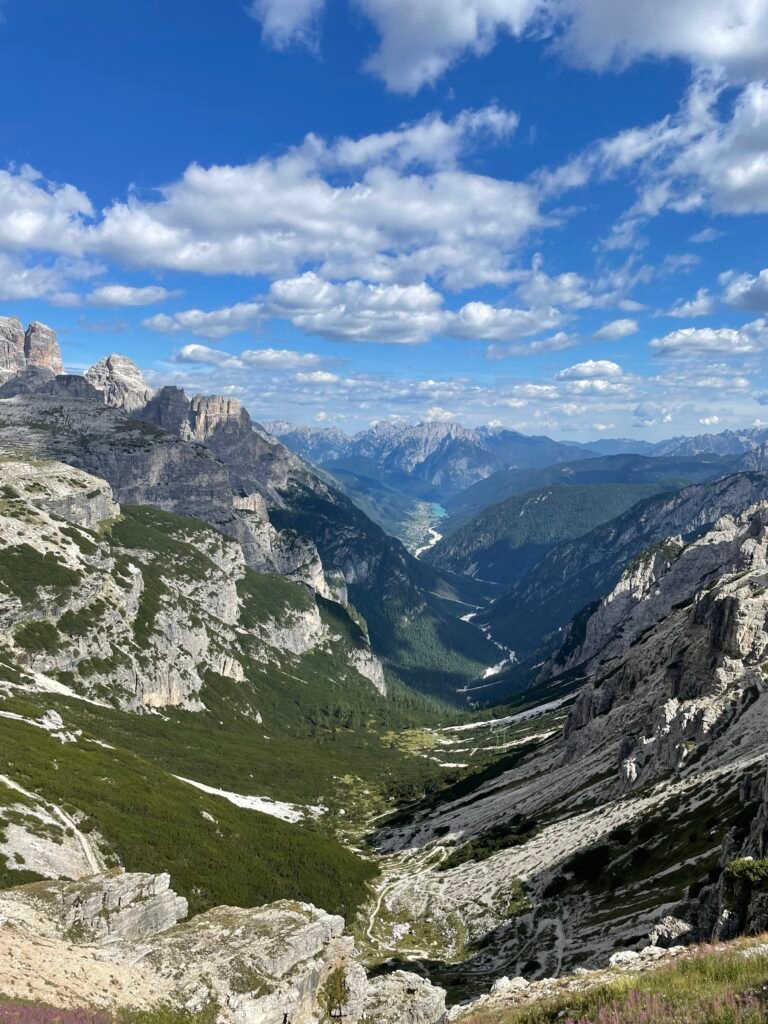
For a unique experience, stay a night at Rifugio Locatelli or at the Dreizinnenhütte, to wake up to stunning views of Tre Cime right outside your window. Remember, you can’t book this on usual hotel sites; you’ll need to book directly on their website well in advance.
Driving to the start point Rifugio Auronzo:
The drive itself is an adventure, taking you through beautiful landscape to the starting point of the hike. There are buses in the summer from nearby towns, but driving gives you the flexibility to start early.
Is there a parking?
Once you’re past the toll, parking at Rifugio Auronzo is straightforward. There’s no extra charge for day visits, but if you’re staying overnight in the area, you’ll pay again the next day. To beat the parking rush and avoid waiting at the toll station, aim to arrive early. If you come in the afternoon, be prepared for a bit of a wait.
DAY 4
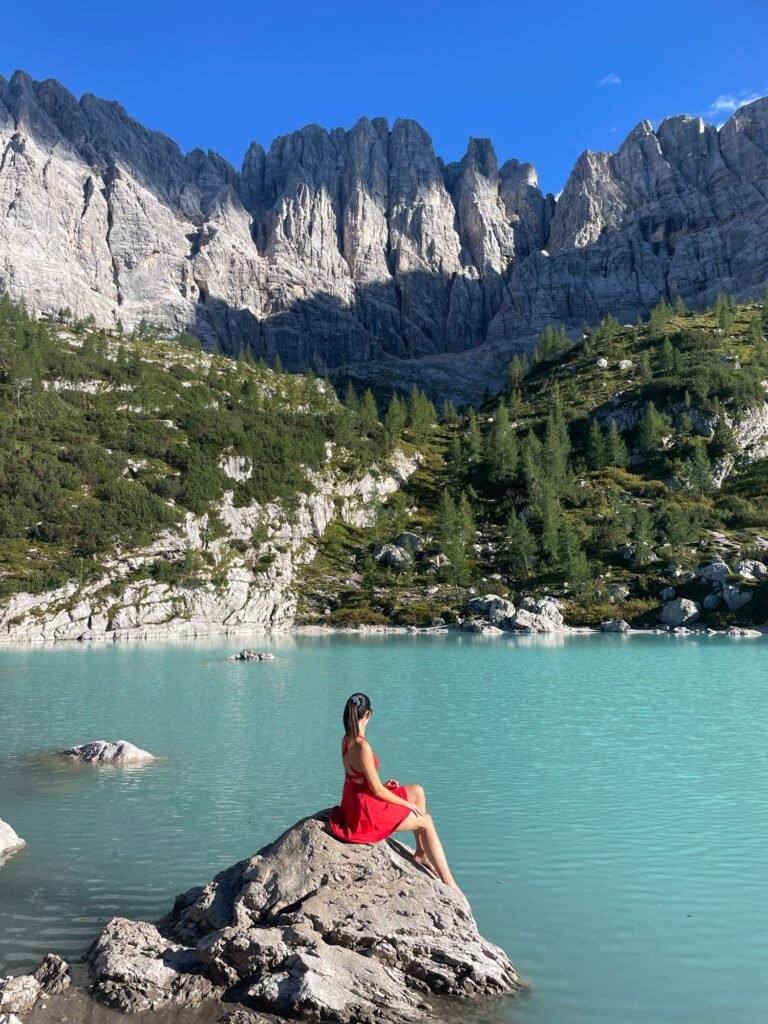
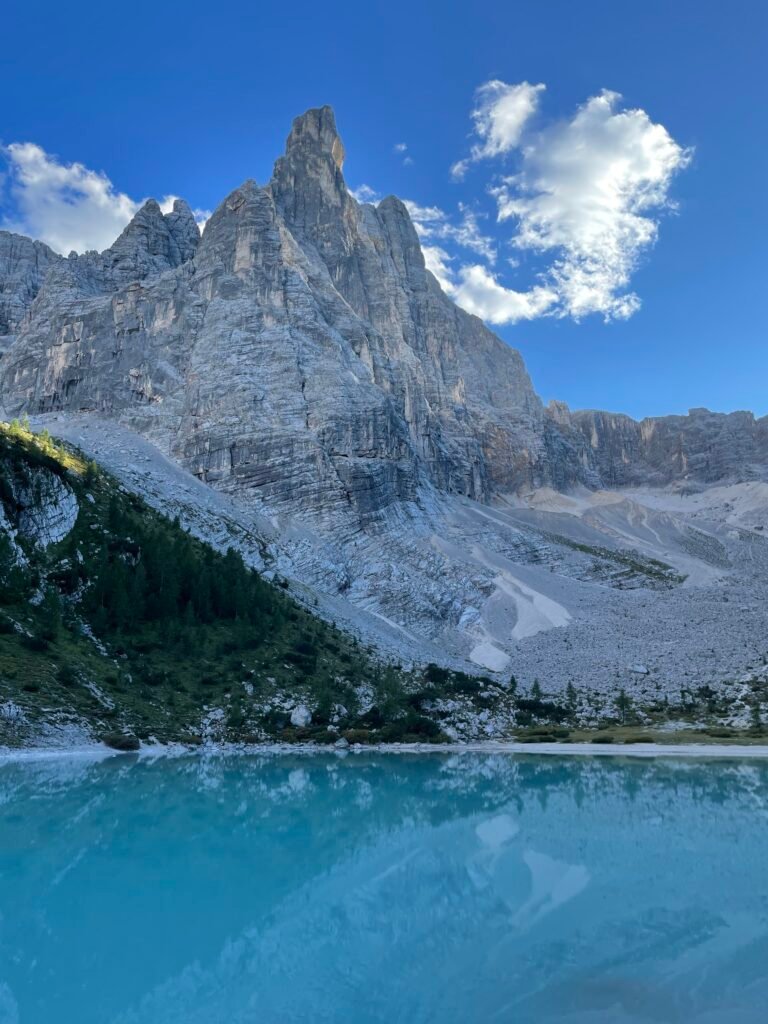
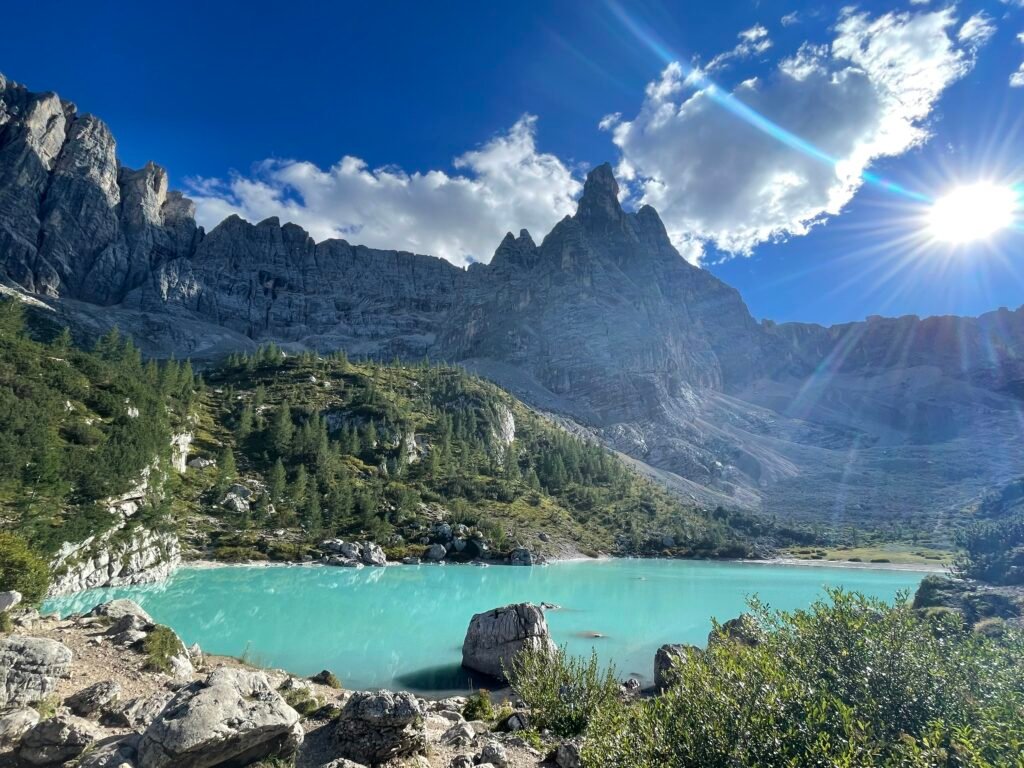
Turquoise waters of Lago di Sorapis
On our fourth day, we ventured to Lago di Sorapis, known for its stunning turquoise waters, set dramatically at the base of the « Finger of God » mountain.
Hike details:
- Start Point: Passo Tre Croci, nestled between the beautiful towns of Cortina d’Ampezzo and Lake Misurina.
- Distance: 13.2 km for the whole circuit
- Time: About 5 hours round trip
- Elevation Change: 846 meters up and down
- Difficulty: The hike up is moderately hard, with some narrow parts. Because it’s so popular, the path can be slippery from wear.
- Trail Numbers: 215 to the lake, 216 for the quiet return
Best time to hike the Lake Sorapis:
The trail opens from late June through October. Late season, like September or early October on a weekday, is perfect to avoid crowds. By late October, the lake can start to freeze over.
How to get to the Lake Sorapis?
Passo Tre Croci is easy to reach by car or bus, sitting on the SR48 road. Parking’s free along the road, but it fills up fast. There’s extra parking west of the trailhead if needed.
About the trails and the crowds:
The direct path to Lago di Sorapis is well-known and often packed with fellow hikers. For a quieter return, you can chose trail 216 via the Forcella Marcoira saddle. Apparently, it is peaceful but challenging, with steep and rocky paths – for experienced hikers only.
Is it allowed to swim in the Lake Sorapis or to camp there?
Swimming in Lago di Sorapis isn’t allowed to protect its beauty. And remember, setting up a tent around here is against the rules, too.
Staying overnight:
If you want to stay close to the lake, Rifugio Vandelli is your best bet. Book ahead, as it fills up quickly!
DAY 5
Discovering Lago di Carezza, the rainbow lake of South Tyrol
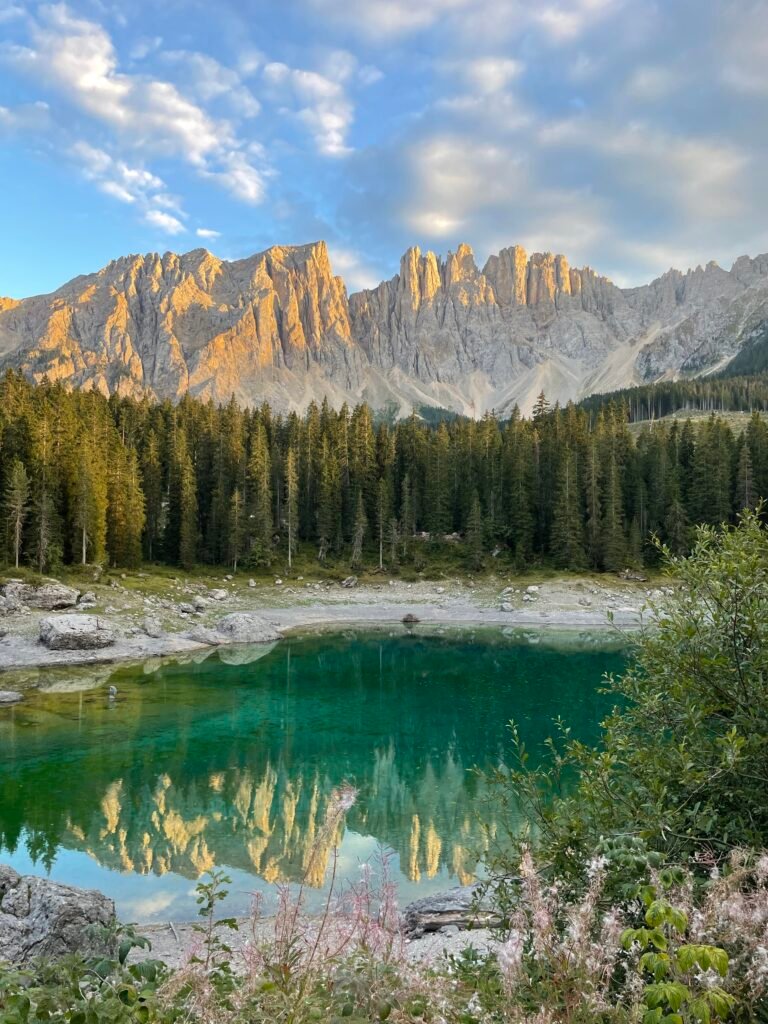
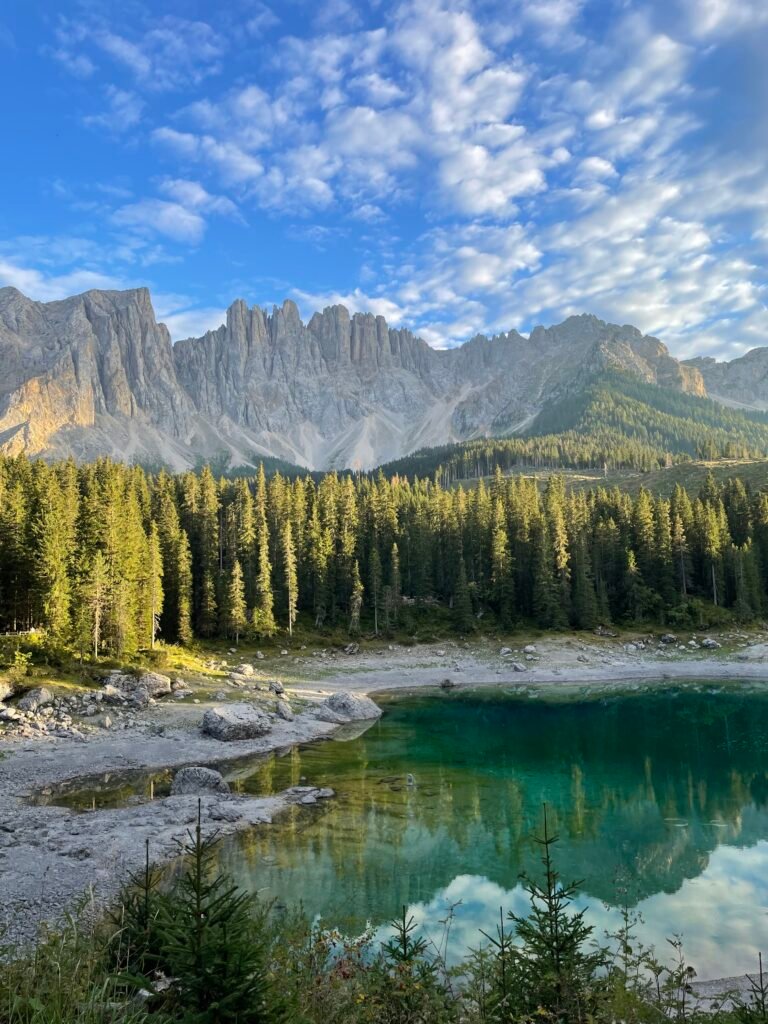
On our last day of our Dolomites adventure, we checked out at the accommodation and set off to explore Lago di Carezza, known as the Rainbow Lake. This lake is a magnet for tourists, drawn by its beautiful waters and stunning backdrop.
How to get to the Lake Carezza?
Just about 35 km west of Bolzano, Lago di Carezza is accessible via the SS241 road. A large parking area welcomes visitors right at the lake. Parking’s pretty affordable at 1 Euro per hour. Though, if you’re in a camper van, note that overnight stays are not allowed.
How to get from the parking to the lake?
After parking, head over to the visitor center. There’s a tunnel from there that takes you down a level, straight to the lake, bypassing the need to cross any roads. Coming out of the tunnel, you’re greeted by a visitor’s terrace that offers breathtaking views of the lake and the encircling mountains.
Hiking around Lake Carezza:
Beyond the half-hour walk around the lake, several trails invite further exploration, suitable for both hikers and mountain bikers. Signs around the lake provide details on these various paths.
Is it allowed to swim in the Lake Carezza?
Despite its inviting waters, swimming in Lago di Carezza is strictly prohibited to preserve its unique ecosystem. The lake is also encircled by a fence, preventing direct access to its banks.
Is Lake Carezza worth visiting?
If you’re pondering whether Lago di Carezza merits a visit, here’s my take: While the lake itself is undeniably beautiful, dedicating an entire day to it might not be necessary. The walk around the lake takes just half an hour, so it’s quite brief. Given this, I’d recommend pairing your visit to Lago di Carezza with another destination nearby to make the most of your day. It’s the perfect addition to a day of exploration in this picturesque region of Italy.
After the Dolomites, what’s next?
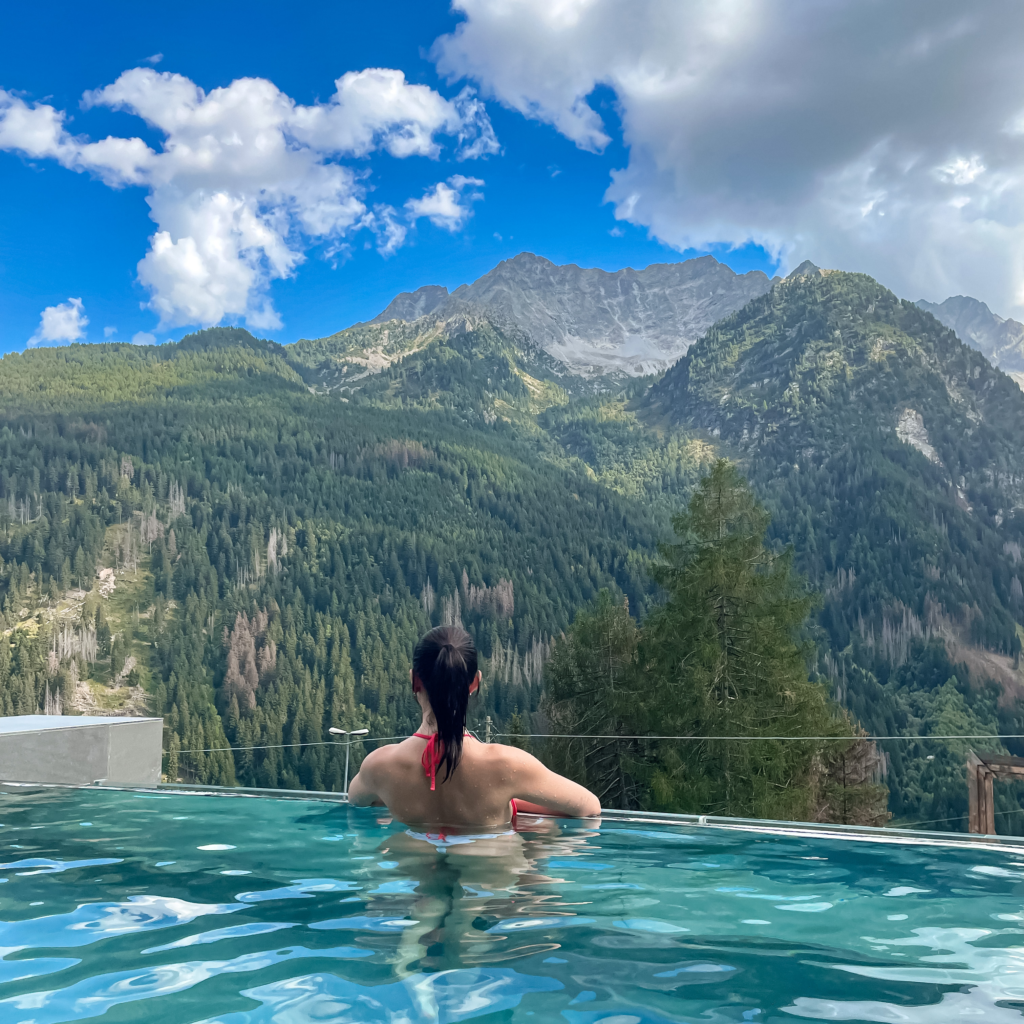
On day five, we packed up and left early. After taking in the views of Lago di Carezza, we hit the road again, heading for Lake Como where we stayed there for three days.
After our time at Lake Como, it was time to drive back to Luxembourg. We were happy but already missing the adventure and the beautiful sights. It was an amazing trip, and I’m sure I’ll go back one day to explore even more.
